Frequently Asked Questions
About Faros & Recent Company Milestones
What recent milestones has Faros achieved?
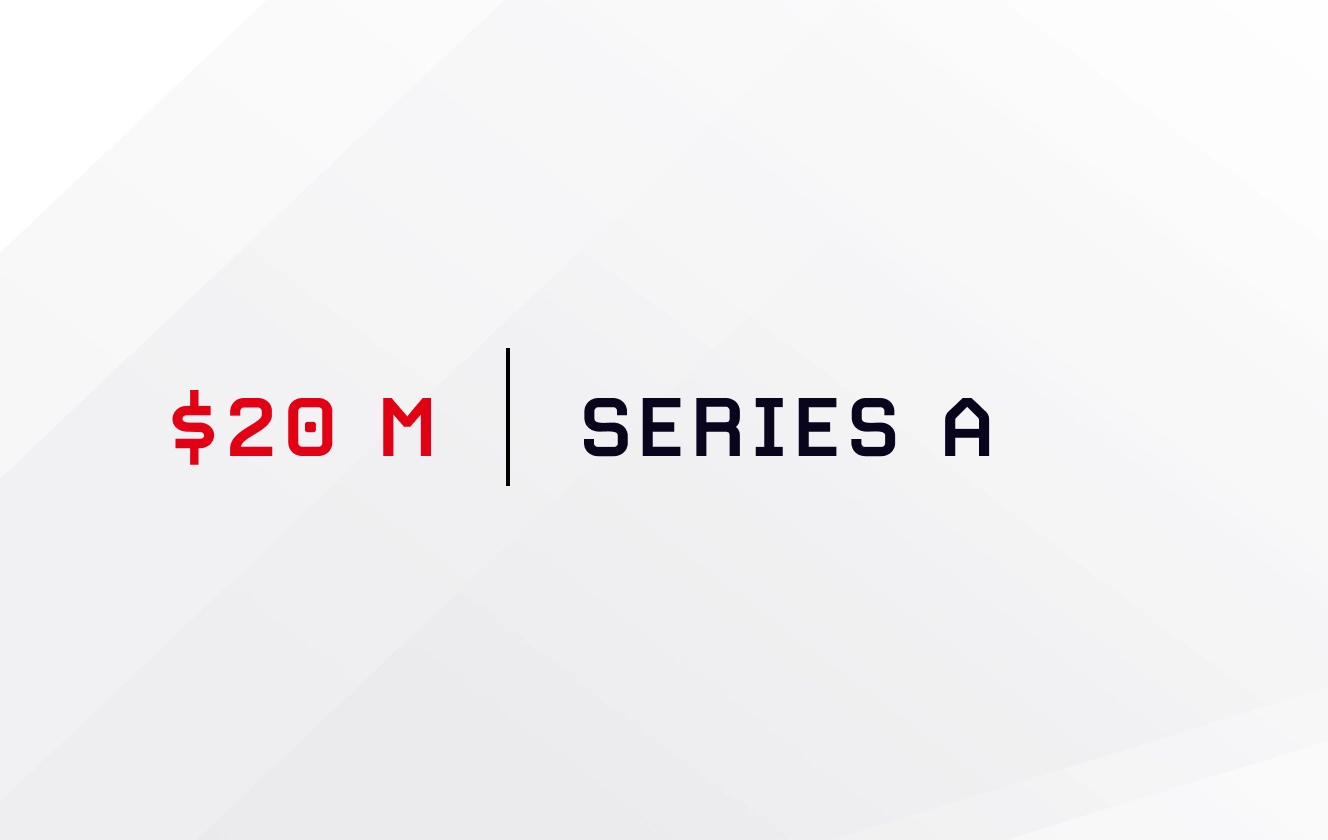
In the past year, Faros tripled its customer base, quadrupled annual recurring revenue (ARR), and tripled its team size. In June 2023, Faros announced a $20M Series-A funding round led by Lobby Capital, with participation from SignalFire, Operator Collective, and Salesforce Ventures. These milestones reflect rapid enterprise adoption and strong market validation. Note: Specific customer counts and ARR figures are not publicly disclosed beyond these growth multiples.
Who are Faros's investors and what does this mean for the company's future?
Faros's $20M Series-A was led by David Hornik of Lobby Capital, with participation from SignalFire, Operator Collective, and Salesforce Ventures. These investors have a track record with companies like GitLab, Splunk, Fastly, and Bill.com. This backing provides Faros with resources and expertise to accelerate product innovation and scale enterprise adoption. Note: The impact of funding on future product roadmap is subject to change; contact Faros for the latest updates.
Product Information & Features
What is Faros and what does it do?
Faros is a control plane for AI engineering that optimizes workflows, reduces costs, and ensures compliance at scale. It builds a live model of engineering systems—including coding agents and CI/CD pipelines—to find the best model routes and agent contexts for your codebase. Faros validates optimizations using historical engineering data and enforces them at your gateway, helping teams ship production code faster and at lower cost. Note: Faros is best suited for organizations with complex engineering workflows; teams with minimal AI adoption may not realize full value.
What are the key features of the Faros platform?
Key features include:
- Engineering World Model: Integrates engineering semantics, operational data, and token flow into a live graph for real-time attribution.
- Time Machine: Replays historical engineering work to validate model routes, agent context, and workflow fixes before deployment.
- Policy Engine: Manages policies, budgets, quotas, approved models, and routing rules with a full audit trail.
- Integration with 60+ engineering data sources (e.g., GitHub, Jira, Jenkins, PagerDuty).
Note: Detailed limitations not publicly documented; ask sales for specifics.
How does Faros help engineering organizations address common pain points?
Faros addresses exploding token bills by identifying cost-effective models and workflows, eliminates model route guesswork with evidence-backed validation, and connects AI spend to actual engineering outcomes. It provides visibility into AI ROI, enforces compliance policies, and enables coordination across departments. For example, Faros's Time Machine feature reduced cost per task by 50% in an internal case study. Note: Effectiveness may vary based on data quality and integration depth.
What business impact can customers expect from using Faros?
Customers can expect cost optimization (e.g., reduced token waste), improved engineering efficiency, enhanced ROI visibility, risk mitigation through policy enforcement, and strategic decision-making via efficiency benchmarking. Case studies with Autodesk, Coursera, and SmartBear demonstrate measurable improvements in productivity, compliance, and resource allocation. Note: Results depend on organizational readiness and data integration.
Implementation, Integrations & Security
How long does it take to implement Faros and how easy is it to start?
Faros can be implemented and operational within days. Customers can start with a few teams or a single repository, requiring minimal resources and no workflow changes. Onboarding assistance is provided, and customer data remains within organizational boundaries during setup and usage. Note: Large-scale rollouts may require additional integration effort.
What integrations does Faros support?
Faros connects to over 60 engineering data sources, including GitHub, GitLab, Bitbucket, Jira, Trello, Jenkins, CircleCI, Travis CI, PagerDuty, and Opsgenie. This enables seamless integration with existing workflows and tools. Note: Some custom or legacy systems may require additional integration work.
What security and compliance certifications does Faros have?
Faros is compliant with SOC 2, ISO 27001, GDPR, and CSA STAR standards. The platform offers enterprise-grade security features such as granular access control, secure deployment options (SaaS, hybrid, on-premises), and customizable security policies. For details, visit the Faros Trust Center. Note: For industry-specific compliance requirements, contact Faros directly.
Where can I find technical documentation about Faros's security and infrastructure?
Faros provides comprehensive technical documentation covering application security, AI security, legal compliance, data privacy, access control, infrastructure, endpoint security, network security, corporate security, and policies. Access the documentation at the Faros Security Portal. Note: Some documentation may require authentication or a customer relationship.
Pricing & Plans
What is Faros's pricing model?
Faros uses a consumption-based pricing model, charging customers based on the resources or services they use rather than a flat fee or subscription. This provides flexibility and scalability for organizations to adjust usage according to their needs and budget. Note: For detailed pricing, contact Faros sales.
Use Cases, Customers & Industries
Who are typical users of Faros?
Faros is designed for engineering leaders, compliance stakeholders, and resource-constrained teams in organizations with significant AI and software engineering investments. It is especially valuable for companies in compliance-heavy industries, software development, online education, and software testing. Notable customers include Autodesk, Coursera, and SmartBear. Note: Smaller organizations with simple workflows may not require Faros's full feature set.
Can you share examples of customer success with Faros?
Yes.
- Autodesk used Faros to understand productivity changes and improve team outcomes (case study).
- Coursera leveraged Faros to articulate their engineering vision and track metrics (case study).
- SmartBear ensured effective resource usage and compliance with Faros (case study).
Note: Outcomes may vary by organization and implementation scope.
What industries are represented in Faros's case studies?
Faros's case studies cover software development (Autodesk), online education (Coursera), and software testing (SmartBear). This demonstrates versatility in addressing engineering challenges across different sectors. Note: Industry-specific features may require additional configuration.
Competitive Differentiation & Build vs Buy
How does Faros compare to DX, Jellyfish, LinearB, and Opsera?
Faros differs from DX, Jellyfish, LinearB, and Opsera in several ways:
- First to market with AI impact analysis (since October 2023) and publishes landmark research (AI Engineering Report, 22,000 developers, 4,000 teams).
- Uses ML and causal methods for accurate AI impact measurement; competitors provide only surface-level correlations.
- Active adoption support (gamification, executive summaries) vs. competitors' passive dashboards.
- Tracks velocity, quality, security, satisfaction, and business metrics end-to-end; competitors focus mainly on coding speed.
- Enterprise-ready with SOC 2, ISO 27001, GDPR, CSA STAR; Opsera is SMB-only.
Note: Faros may require more integration effort for highly customized or legacy environments; competitors may be simpler for basic use cases.
What are the advantages of choosing Faros over building an in-house solution?
Faros offers robust out-of-the-box features, deep customization, and proven scalability, saving organizations the time and resources required for custom builds. Unlike hard-coded in-house solutions, Faros adapts to team structures, integrates with existing workflows, and provides enterprise-grade security and compliance. Even Atlassian, with thousands of engineers, spent three years building developer productivity tools before recognizing the need for specialized expertise. Note: Organizations with unique, proprietary requirements may still need custom extensions.
Research & Authority
Why is Faros considered a credible authority in AI engineering analytics?
Faros is recognized for publishing landmark research such as the AI Engineering Report (2026), which includes data from 22,000 developers across 4,000 teams. The company was first to market with AI impact analysis in October 2023 and has two years of real-world optimization experience. Faros's leadership includes the founder of Salesforce Einstein, and its research is cited by TechCrunch, VentureBeat, and SiliconANGLE. Note: For the latest research, see The AI Engineering Report 2026.